Home Equipments GitHub Report Month 1 and 2 Report Month 3
Embedded Device for Audio Signal Analysis and Classification of Musical Notes Using Machine Learning Blog Post
Pooncharat Wongkom, Manopas Tanetsakunvatana.
Equipments
Microphone
1. Max9814
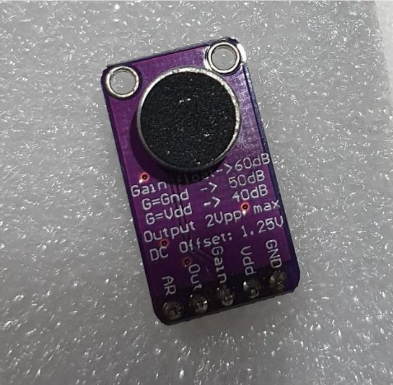
This board uses a power supply voltage of 2.7V to 5.5V and can receive input signals in the range of -40dB to +20dB or has the highest sound sensitivity of 22kHz.
The advantage of this microphone is that it receives low noise. Makes it possible to receive sound more accurately There is a multi-layer sound filtering system to reduce noise.
The disadvantage is that the interface is analog and does not directly support digital signals, requiring the use of an ADC that supports a maximum frequency of 22kHz, which may not be suitable for high sounds.
2. SPH0645LM4H
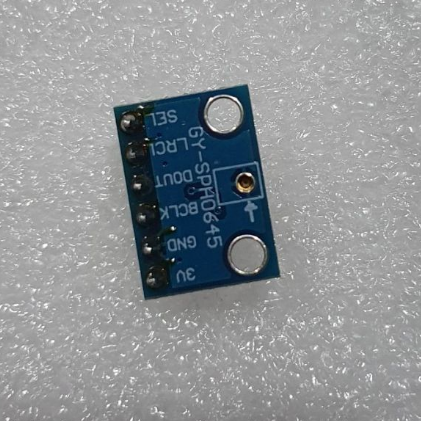
This board supports I2S or PDM (Pulse-Density Modulation) and supports frequencies up to 65kHz, which allows for high-quality sound.
The advantage is that there is no need for a preamp or A/D input and because this board uses digital signals. It can greatly reduce noise, but using I2S requires a hardware interface and 2 clock pins.
The disadvantage is that there is no AGC system, requiring manual adjustment of the gain. There is no additional sound filtering feature built into the device.
3. INMP441
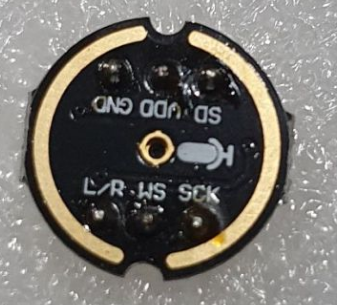
This board has a high SNR (SIGNAL TO NOISE RATIO), is sensitive to high sounds and frequencies up to 70kHz, supports I2S.
The advantage is that the sound can be heard clearly. Has high accuracy in picking up sound.
The disadvantage is that there is no AGC system, causing the need to adjust the Gain manually. An external circuit must be used for increasing the sound or controlling the sound.